
Humectant · 한국 전통 뷰티 성분 백과사전
폴리글루탐산polligeullutamsan
Sodium Polyglutamate (Polyglutamic Acid)
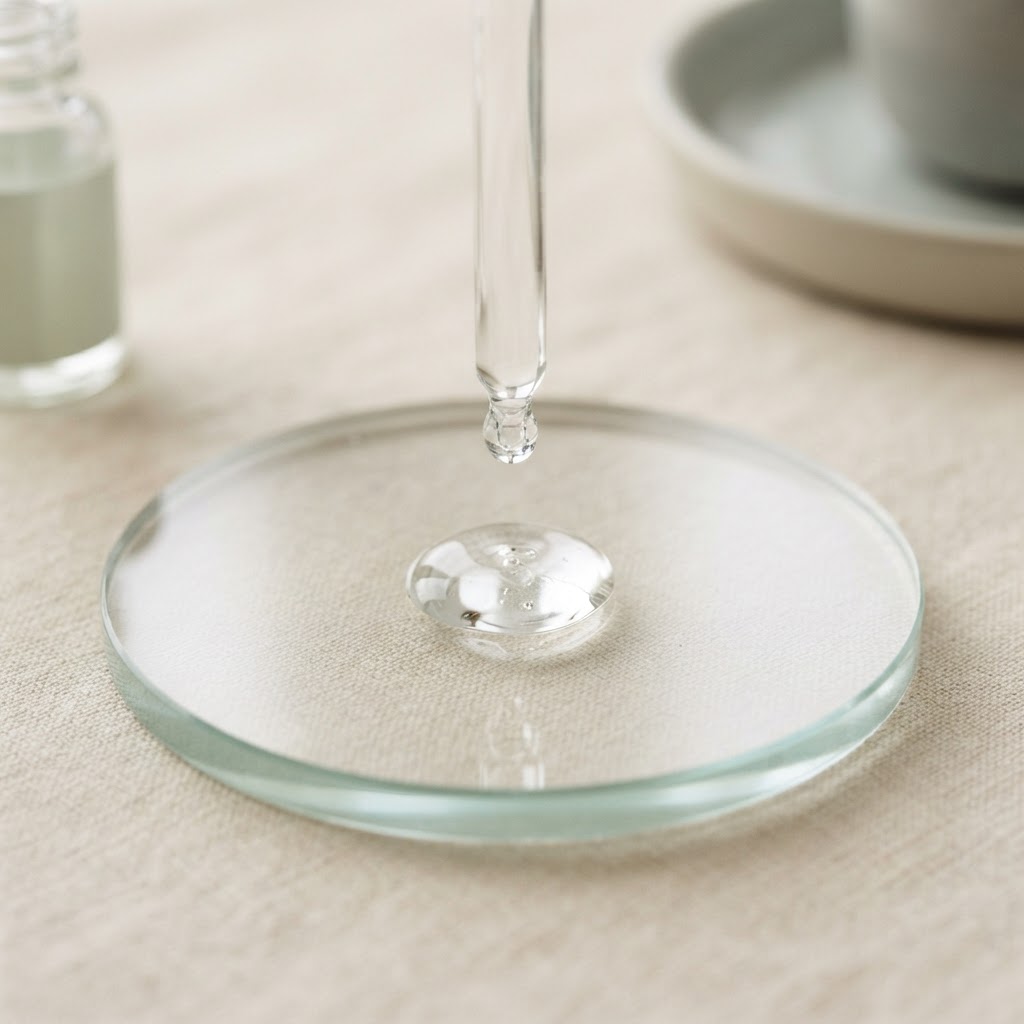
A fermentation-derived polypeptide humectant that holds water on the surface in a light film, with promising rather than established evidence for its cosmetic role.
Scientific identification
How to read this identification: Sodium polyglutamate is a high-molecular-weight polypeptide produced by fermentation, and it is not the same material as the food additive monosodium glutamate or as the amino acid glutamic acid: the polymer holds water in a film, while the small molecules do not behave that way. A label does not state the molecular weight, which decides whether a product feels light or slightly tacky.
INCI name: Sodium Polyglutamate
Modern cosmetic ingredient
This classification records the context the ingredient is documented in, not where it comes from: a Korean heritage ingredient is one with documented use in Korean practice, while a modern cosmetic ingredient carries no heritage claim. Neither label states that the ingredient originated in Korea.
Skin concerns this profile is offered for
A browsing aid and a statement of cosmetic intent only: it diagnoses nothing and promises no result.
Modern cosmetic context
Sodium polyglutamate is a modern cosmetic ingredient and carries no Korean heritage claim. It is included because it has become a familiar humectant in contemporary Korean skincare, where it appears in essences, ampoules, serums and masks, often in a hydrating line alongside hyaluronic acid. Its place is modern formulation, and nothing on this profile presents it as a traditional ingredient.
References
- Cosmetic science literature on polyglutamic acid and its salt as a humectant and film-former · Published cosmetic science literature
- Literature on the fermentation production and molecular weight of polyglutamate polymers · Published biopolymer literature
Modern Cosmetic Science
Modern cosmetic applications
- Used in hydrating essences, ampoules, serums, creams and masks, often with other humectants
- Chosen for a smooth, slightly film-forming feel on the surface, and usually layered under an emollient so the water it holds is not lost to dry air
Sodium polyglutamate is a large polypeptide that binds a great deal of water and forms a light film on the surface, which is well described in cosmetic science. Its measured effect on skin hydration has been reported in small studies, but the evidence base is much thinner than for glycerin or hyaluronic acid, which is why the humectant and moisturising positions are rated promising rather than established. No study establishes a measured improvement in skin smoothness, so the texture claim is rated experimental.
Benefits & Limitations
Evidence by claim
Every rating applies to ONE claimed benefit. An ingredient is never given a single overall effectiveness score.
Humectant water-binding in a cosmetic formulation
PromisingRating approved by an authorized reviewerRated promising: preliminary or composition-level evidence exists for this specific claim, and the rating does not extend beyond it. Claim: Humectant water-binding in a cosmetic formulation
Moisturizing support in a formulated product
PromisingRating approved by an authorized reviewerRated promising: preliminary or composition-level evidence exists for this specific claim, and the rating does not extend beyond it. Claim: Moisturizing support in a formulated product
A smoother-feeling skin surface in a cosmetic formulation
ExperimentalRating approved by an authorized reviewerRated experimental: evidence for this claim is insufficient, so it is stated as a cosmetic focus or expectation only. Claim: A smoother-feeling skin surface in a cosmetic formulation
What is not claimed
No claim is made that sodium polyglutamate reduces wrinkles, increases collagen, changes the skin structure or produces a lasting improvement in skin texture. A film that holds water and feels smooth is a surface effect, and it lasts as long as the product is on the skin.
Safety & Allergies
- Sodium polyglutamate is generally well tolerated and no cosmetic allergen is established for it
- At a high concentration it can feel tacky, and a tacky film can pill under makeup or sunscreen; if a product feels sticky, use less of it rather than layering more
Related Beauty Rituals
No related beauty ritual is recorded for this ingredient yet.
Professionally formulated products
No professionally formulated product is listed for this ingredient yet.
This is a modern cosmetic ingredient. No traditional or cultural association is recorded for it, and none is claimed.
Related ingredients
Grain
쌀
Rice
The grain at the centre of Korean daily life, and the source of rice-derived cosmetic ingredients.
Dryness and dehydration · Rough texture and pores
ExploreGrain
율무
Job's Tears
The bead-like grain used in East Asian food and herbal traditions, and in some skincare products.
Dryness and dehydration · Rough texture and pores
ExploreHerb
연꽃
Lotus
A plant woven through Korean culture and cooking, whose flower, leaf and root are now also used in modern Korean skincare.
Dryness and dehydration · Rough texture and pores
ExploreRelated by the concerns and category they share. This is not a ranking and not a recommendation from your own assessment.