Grain · 한국 전통 뷰티 성분 백과사전
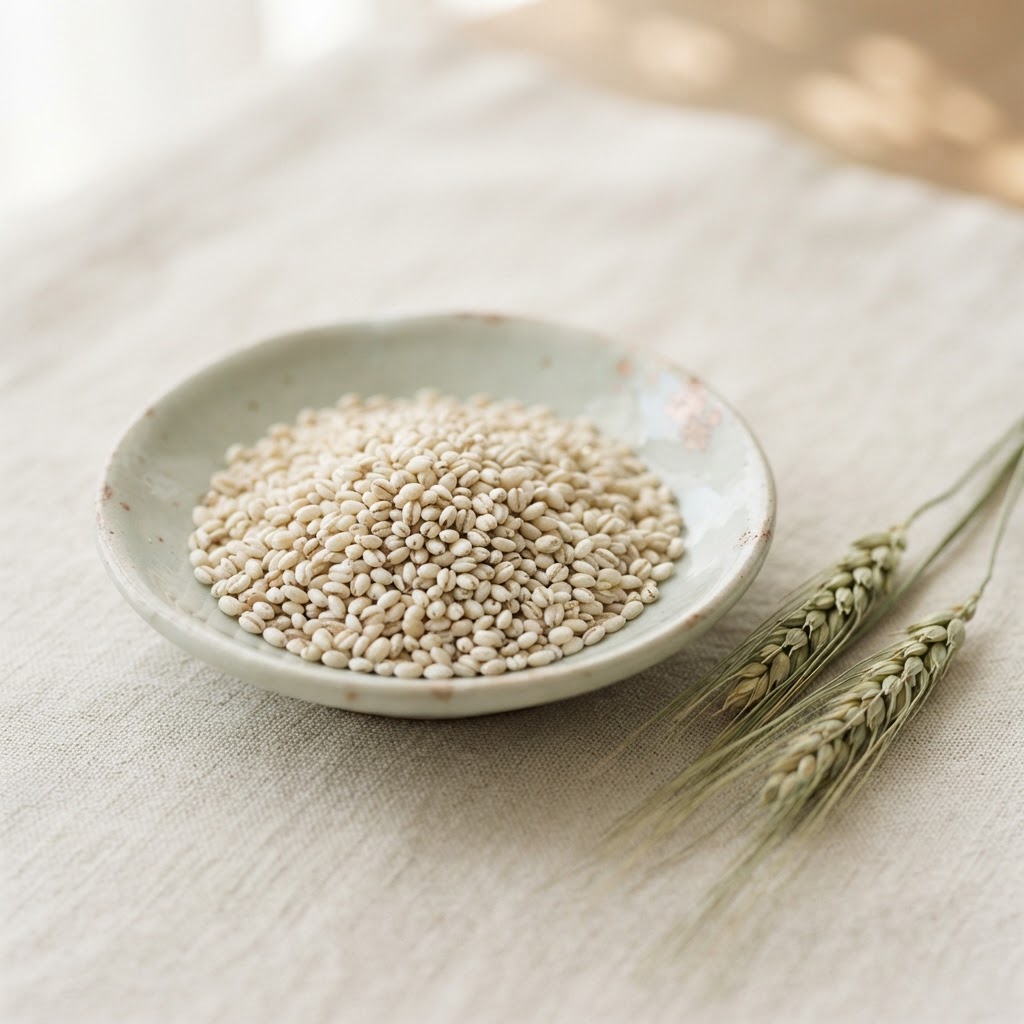
보리bori
Barley
The grain of Korean agriculture and everyday cooking, and a source of barley-derived cosmetic ingredients.
Scientific identification
Hordeum vulgare
INCI name: Hordeum Vulgare Extract
Korean heritage ingredient
This classification records the context the ingredient is documented in, not where it comes from: a Korean heritage ingredient is one with documented use in Korean practice, while a modern cosmetic ingredient carries no heritage claim. Neither label states that the ingredient originated in Korea.
Skin concerns this profile is offered for
A browsing aid and a statement of cosmetic intent only: it diagnoses nothing and promises no result.
Korean Heritage
Barley has a long history in Korean agriculture and cuisine: barley rice and roasted barley tea are everyday foods, and the grain carried households through the lean months of the agricultural calendar.
Traditional uses
- Barley rice and roasted barley tea in everyday Korean eating
- Barley water used in household preparations
References
- Hordeum Vulgare Extract — labelling name and declared cosmetic function · European Commission CosIng cosmetic ingredient database · https://ec.europa.eu/growth/tools-databases/cosing/
- The cosmetic safety and claims framework this profile is written under · Regulation (EC) No 1223/2009 on cosmetic products, consolidated text · https://eur-lex.europa.eu/eli/reg/2009/1223/oj
- Barley as a documented Korean staple grain and household material · Korean Culture and Information Service (Korea.net) — Korean food and daily-life culture · https://www.korea.net/
- The botanical and constituent records for Hordeum vulgare · PubChem compound database, US National Library of Medicine · https://pubchem.ncbi.nlm.nih.gov/#query=Hordeum%20vulgare
- Indexed literature on barley and Hordeum vulgare extract and skin — the basis for the ratings shown here, not proof of an outcome · PubMed, US National Library of Medicine · https://pubmed.ncbi.nlm.nih.gov/?term=Hordeum%20vulgare%20extract%20skin
Modern Cosmetic Science
Modern cosmetic applications
- Barley-derived extracts are used in skin-conditioning formulations
- Barley extract appears in products positioned around antioxidant protection
Barley and its extracts contain compounds studied for antioxidant activity, largely in laboratory and food-science work. Very little of that work applies an extract to skin, so it does not establish a cosmetic effect for a barley preparation.
Benefits & Limitations
Evidence by claim
Every rating applies to ONE claimed benefit. An ingredient is never given a single overall effectiveness score.
Skin-conditioning support in a cosmetic formulation
TraditionalRating approved by an authorized reviewerRating reviewed: the traditional use is documented while direct clinical evidence for this claim is limited, which is what this rating records.
Antioxidant activity studied in barley-derived ingredients
PromisingRating approved by an authorized reviewerRating reviewed: preliminary scientific evidence exists for this cosmetic expectation, which is stated as an expectation rather than a measured result.
What is not claimed
Antioxidant activity measured in a laboratory is not a measured improvement in the skin, and no such claim is made here.
Safety & Allergies
- Barley contains gluten. A wheat or gluten allergy, or coeliac disease, must be taken seriously, and anyone who must avoid gluten should avoid a product containing barley
- Barley-derived cosmetic ingredients are generally well tolerated; a formulated product should still be patch-tested
Allergens this recipe can carryBarleyGluten
Related Beauty Rituals
No related beauty ritual is recorded for this ingredient yet.
Professionally formulated products
No professionally formulated product is listed for this ingredient yet.
Barley has a documented history in Korean agriculture and daily eating. That history does not establish a measured cosmetic effect, and the antioxidant work cited is largely laboratory study of the grain.
Related ingredients
Legume
콩
Soybean
The legume at the centre of Korean food culture, and the source of soy-derived cosmetic ingredients.
Dryness and dehydration · Barrier support
ExploreGrain
쌀
Rice
The grain at the centre of Korean daily life, and the source of rice-derived cosmetic ingredients.
Dryness and dehydration · Rough texture and pores
ExploreGrain
쌀겨
Rice Bran
The layer around the rice grain, and the source of rice bran oil and rice bran extract.
Dryness and dehydration · Barrier support
ExploreRelated by the concerns and category they share. This is not a ranking and not a recommendation from your own assessment.