
Oil · 한국 전통 뷰티 성분 백과사전
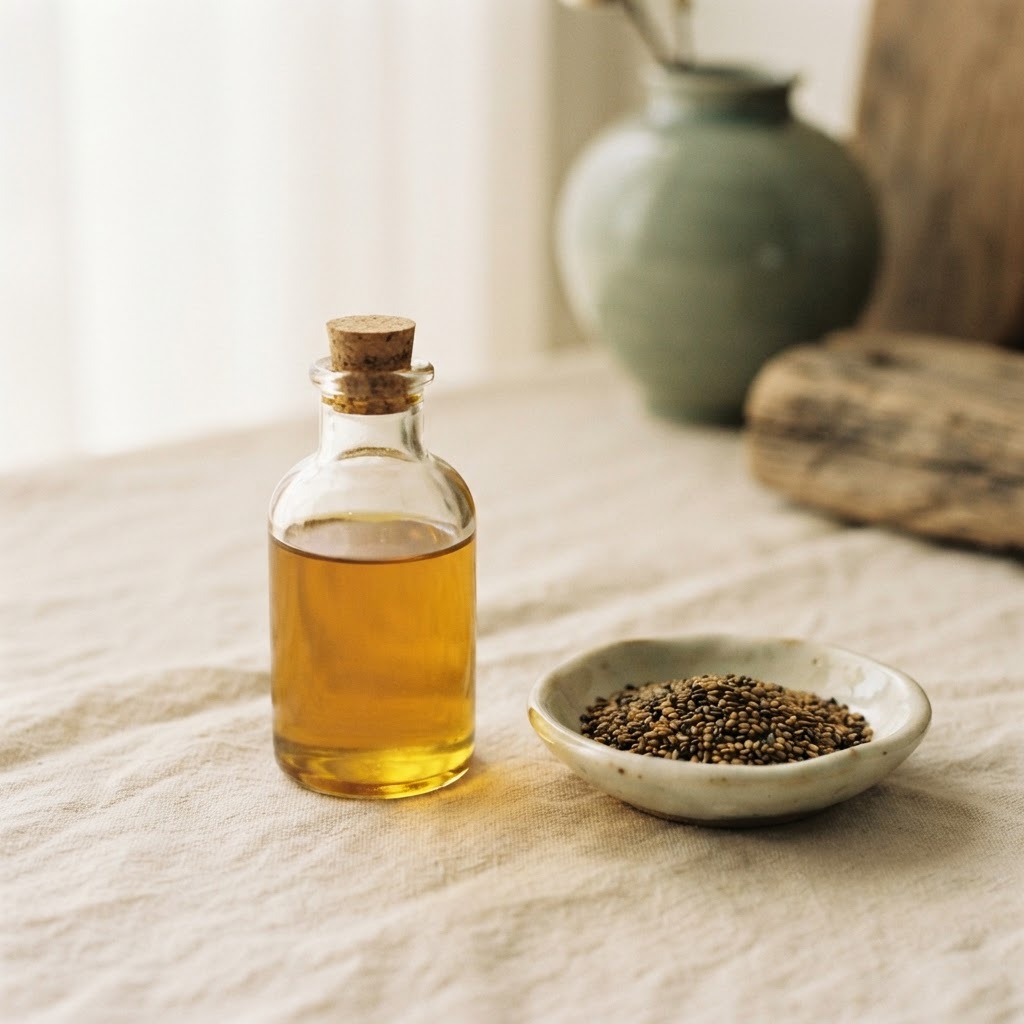
참깨chamkkae
Sesame Seed Oil
A pressed seed oil that is a Korean kitchen staple and also a documented household hair and skin oil, with the allergy caution its seed genuinely carries.
Scientific identification
Sesamum indicum L.
How to read this identification: The labelled material is the seed oil. It is pressed from roasted or unroasted seed and the two differ in scent, colour and composition; cold-pressed oil can also retain traces of seed protein, which matters to anyone with a sesame allergy. A label saying Sesame Seed Oil does not state which process was used.
INCI name: Sesamum Indicum (Sesame) Seed Oil
Korean heritage ingredient
This classification records the context the ingredient is documented in, not where it comes from: a Korean heritage ingredient is one with documented use in Korean practice, while a modern cosmetic ingredient carries no heritage claim. Neither label states that the ingredient originated in Korea.
Skin concerns this profile is offered for
A browsing aid and a statement of cosmetic intent only: it diagnoses nothing and promises no result.
Korean Heritage
Sesame seed oil has a long recorded place in Korean daily life. It is one of the fundamental cooking oils of the Korean kitchen, pressed from sesame seed, and it is used as a seasoning oil and in food. The same oil has a recorded place in Korean household practice as a hair and skin oil, applied to the ends of the hair and to dry skin, and sesame itself has been cultivated and used in Korea for a very long time. This encyclopedia records that place as cultural context, and it does not present a traditional hair oil as evidence of a cosmetic or medical effect.
Traditional uses
- A fundamental cooking and seasoning oil in Korean food culture
- Recorded in Korean household practice as an oil applied to hair and to dry skin, noted here as tradition rather than as an established effect
References
- Recorded use of sesame oil in Korean cooking and in household hair and skin care · Documented Korean food and household practice
- Literature on plant oils as cosmetic emollients and their effect on water loss · Published cosmetic science literature
- Reference work on sesame as a food allergen, including its severity · Published allergology literature on sesame allergy
Modern Cosmetic Science
Modern cosmetic applications
- Used as an emollient oil in Korean creams, cleansing oils, hair oils and body products
- Used to soften and to reduce water loss at the skin surface, and often combined with a humectant so that hydration is not left uncovered
Sesame seed oil is a characterised emollient: plant oils soften the skin surface and, applied as a film, reduce water loss from it. That softening function is established for the material. The reduction in measured water loss has been reported for plant oils in cosmetic studies but varies with the oil, the amount applied and the test, which is why that position is rated promising rather than established. No evidence establishes a change in the skin beneath the surface, so no firming or repairing claim is made, and the hair conditioning claim rests on the documented household practice.
Benefits & Limitations
Evidence by claim
Every rating applies to ONE claimed benefit. An ingredient is never given a single overall effectiveness score.
Emollient softening of the skin in a cosmetic formulation
EstablishedRating approved by an authorized reviewerRated established: this is the material's characterised cosmetic function and relevant human evidence supports this specific claim. Claim: Emollient softening of the skin in a cosmetic formulation
A conditioning feel on hair and scalp in an applied product, following its documented traditional association
TraditionalRating approved by an authorized reviewerRated traditional: the association is documented, but direct evidence for this specific cosmetic claim is limited. Claim: A conditioning feel on hair and scalp in an applied product, following its documented traditional association
Reduced water loss from the skin surface in a cosmetic formulation
PromisingRating approved by an authorized reviewerRated promising: preliminary or composition-level evidence exists for this specific claim, and the rating does not extend beyond it. Claim: Reduced water loss from the skin surface in a cosmetic formulation
What is not claimed
No claim is made that sesame oil repairs skin, removes scars or wrinkles, stimulates hair growth or treats any skin or scalp condition. Softening the surface and reducing water loss are not the same as changing the skin beneath, and a traditional oil is not a treatment.
Safety & Allergies
- Sesame is a common food allergen and reactions to it can be severe: anyone with a sesame allergy should avoid sesame seed oil in cosmetics, because cold-pressed oil can retain traces of seed protein
- Sesame oil can be comedogenic for some skin and a heavy oil may not suit oily or blemish-prone skin; test on a small area before using it on the face
Allergens this recipe can carrySesame
Related Beauty Rituals
No related beauty ritual is recorded for this ingredient yet.
Professionally formulated products
No professionally formulated product is listed for this ingredient yet.
Sesame seed oil has a documented place in Korean food and household practice. Traditional use is recorded here as association and documented practice, never as evidence of a cosmetic or clinical effect.
Related ingredients
Oil
동백오일
Camellia Oil
The seed oil of the camellia, associated with East Asian hair and skin practice, including Korea.
Dryness and dehydration · Barrier support
ExploreOil
들기름
Perilla Seed Oil
A pressed Korean household oil from perilla seeds, long used in cooking and kept at home as a softening oil for skin and hair.
Dryness and dehydration · Barrier support
ExploreGrain
쌀겨
Rice Bran
The layer around the rice grain, and the source of rice bran oil and rice bran extract.
Dryness and dehydration · Barrier support
ExploreRelated by the concerns and category they share. This is not a ranking and not a recommendation from your own assessment.