Herb · 한국 전통 뷰티 성분 백과사전
솔잎solip
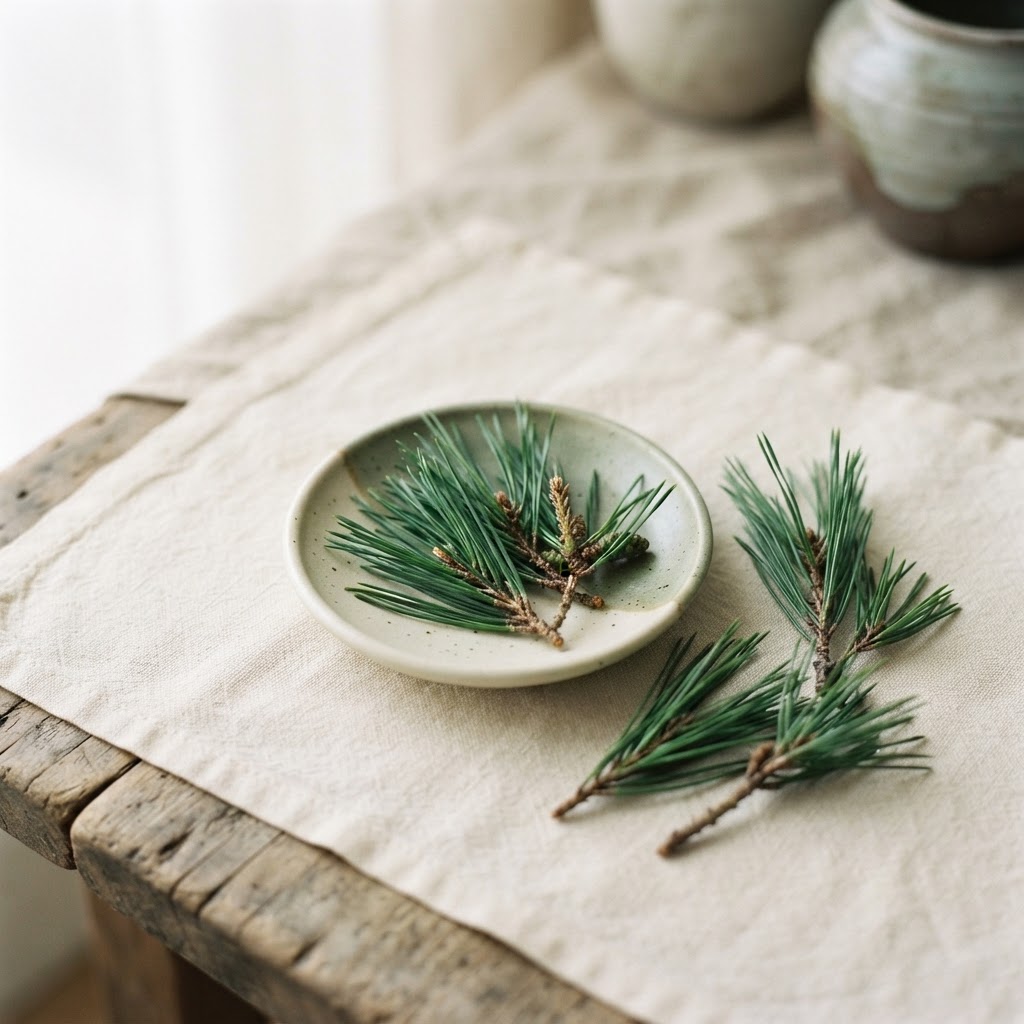
Pine Needle
A pine whose needles have a documented place in Korean household practice, including hair washing, and which carries a real resin-allergy caution.
Scientific identification
Pinus densiflora Siebold & Zucc.
How to read this identification: The species matters: the label material is specifically the leaf of the Korean red pine. A pine needle extract and a pine needle essential oil are different materials — the essential oil is a concentrated volatile fraction with different handling and allergy considerations, and it is never applied undiluted.
INCI name: Pinus Densiflora Leaf Extract
Korean heritage ingredient
This classification records the context the ingredient is documented in, not where it comes from: a Korean heritage ingredient is one with documented use in Korean practice, while a modern cosmetic ingredient carries no heritage claim. Neither label states that the ingredient originated in Korea.
Skin concerns this profile is offered for
A browsing aid and a statement of cosmetic intent only: it diagnoses nothing and promises no result.
Korean Heritage
Pine needle has a long recorded place in Korean daily life. Pine needle tea is a familiar household preparation, pine needle water has been used in bathing and washing, and the needles are associated with household freshness and with the pine that appears throughout Korean landscape and poetry. Its recorded association in Korean practice also extends to washing hair and scalp. This encyclopedia records that place as cultural context, and it does not present a household washing practice as evidence of a cosmetic or medical effect.
Traditional uses
- Prepared as a pine needle tea and used in bathing water in Korean household practice
- Recorded in washing preparations for hair and scalp, noted here as tradition rather than as an established effect
References
- Recorded use of pine needle in Korean tea, bathing and hair-washing practice · Documented Korean household practice
- Literature on Pinus densiflora needle constituents and the properties investigated for them · Published phytochemistry literature on Pinus densiflora
- Reference work on pine resin and colophony as contact allergens · Published dermatological literature on resin contact allergy
Modern Cosmetic Science
Modern cosmetic applications
- Used as a needle extract in Korean scalp and hair products and in body cleansers
- Included in fresh, green-scented botanical blends, where the extract rather than the volatile oil is the cosmetic material
Pine needle contains flavonoids, proanthocyanidins and volatile terpenes, and needle extracts have been examined in laboratory work, mainly for antioxidant activity. A polyphenol or terpene content measured in the laboratory is a property of the extract and not a demonstrated effect on hair growth, scalp condition or sebum, which is why the oiliness claim is rated experimental and no claim is made about hair growth. The antioxidant position is rated promising on that work, and the conditioning claim is recorded as traditional because it rests on the documented washing practice rather than on clinical evidence.
Benefits & Limitations
Evidence by claim
Every rating applies to ONE claimed benefit. An ingredient is never given a single overall effectiveness score.
A conditioning feel on hair and scalp in an applied product, following its documented traditional association
TraditionalRating approved by an authorized reviewerRated traditional: the association is documented, but direct evidence for this specific cosmetic claim is limited. Claim: A conditioning feel on hair and scalp in an applied product, following its documented traditional association
Antioxidant focus in a cosmetic formulation
PromisingRating approved by an authorized reviewerRated promising: preliminary or composition-level evidence exists for this specific claim, and the rating does not extend beyond it. Claim: Antioxidant focus in a cosmetic formulation
A cosmetic focus on the look of oily-feeling skin and scalp
ExperimentalRating approved by an authorized reviewerRated experimental: evidence for this claim is insufficient, so it is stated as a cosmetic focus or expectation only. Claim: A cosmetic focus on the look of oily-feeling skin and scalp
What is not claimed
No claim is made that pine needle promotes hair growth, treats hair loss, treats dandruff or any scalp disease, or controls oil production. A traditional washing preparation is not a treatment, and pine needle essential oil is not the same material as a needle extract.
Safety & Allergies
- Pine belongs to a family with well-known resin allergy: people sensitive to colophony or pine resin may also react to pine products
- Never apply pine needle essential oil undiluted and never take pine needle oil internally; use only a formulated product, and patch-test first if your skin is reactive
Allergens this recipe can carryPine
Related Beauty Rituals
No related beauty ritual is recorded for this ingredient yet.
Professionally formulated products
No professionally formulated product is listed for this ingredient yet.
Pine needle has a documented place in Korean household practice, including hair and scalp washing. Traditional use is recorded here as association and documented practice, never as evidence of a cosmetic or clinical effect.
Related ingredients
Herb
생강
Ginger
A warming Korean kitchen and tea staple whose pungent compounds have been investigated, included for its documented place in Korean daily life rather than for a proven cosmetic effect.
Sensitive-feeling skin and visible redness · Oily-feeling and blemish-prone skin
ExploreHerb
어성초
Houttuynia Cordata
A Korean herbal plant traditionally taken as a tea and applied to troubled, oily-feeling skin, now a common soothing botanical in Korean skincare.
Sensitive-feeling skin and visible redness · Oily-feeling and blemish-prone skin
ExploreTea
녹차
Green Tea
The tea leaf of Korean daily life, and a studied antioxidant cosmetic ingredient.
Sensitive-feeling skin and visible redness · Uneven tone and dark spots
ExploreRelated by the concerns and category they share. This is not a ranking and not a recommendation from your own assessment.