Herb · 한국 전통 뷰티 성분 백과사전
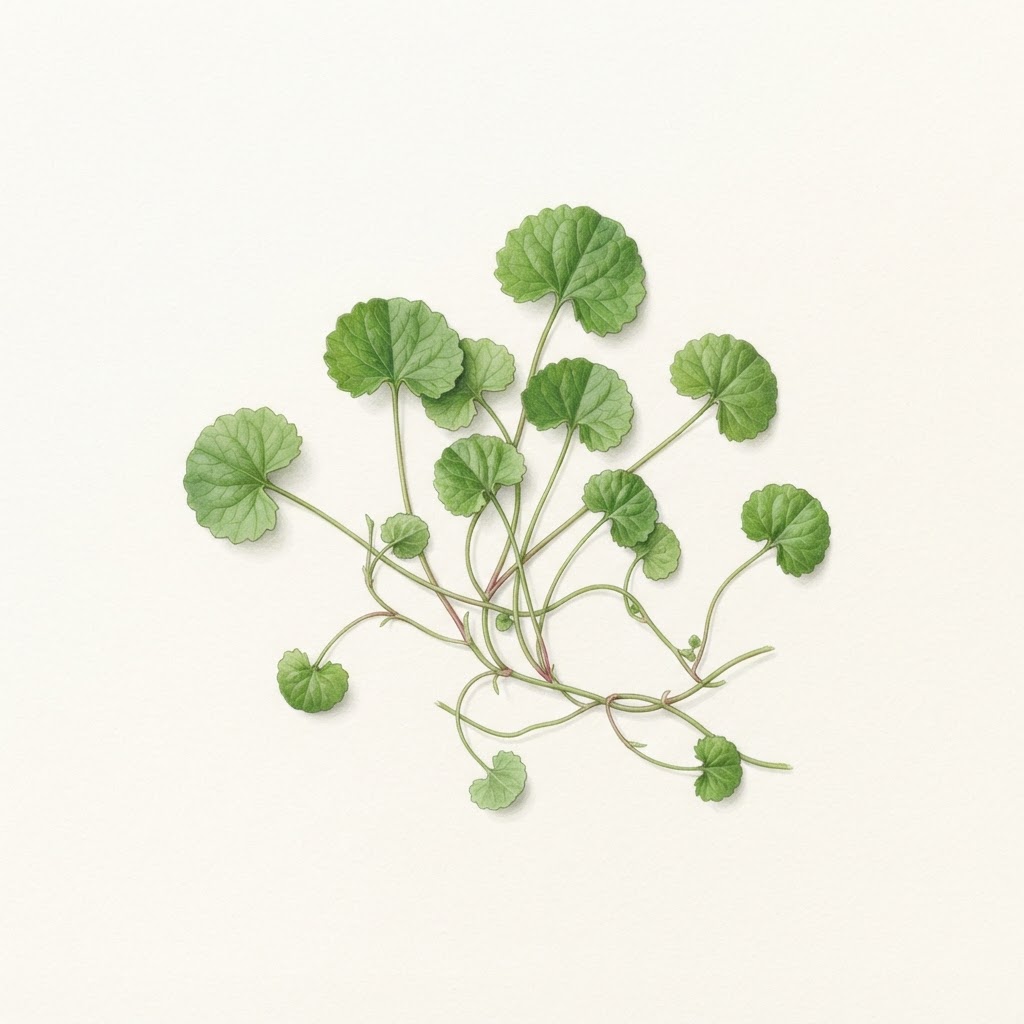
병풀byeongpul
Centella Asiatica
A soothing herb recorded in Korean herbal practice, and one of the most familiar calming botanicals in Korean skincare formulation.
Scientific identification
Centella asiatica
How to read this identification: Korean cosmetics name 병풀, and also its older Korean name 호장근 in some herbal sources; the extract is usually declared simply as Centella Asiatica Extract, without naming the cultivar.
INCI name: Centella Asiatica Extract
Korean heritage ingredient
This classification records the context the ingredient is documented in, not where it comes from: a Korean heritage ingredient is one with documented use in Korean practice, while a modern cosmetic ingredient carries no heritage claim. Neither label states that the ingredient originated in Korea.
Skin concerns this profile is offered for
A browsing aid and a statement of cosmetic intent only: it diagnoses nothing and promises no result.
Korean Heritage
Centella asiatica, known in Korea as 병풀, is recorded in Korean and wider East Asian herbal practice, where the plant has been applied topically to minor wounds and irritated skin. That herbal record is why the plant sits in Korean plant knowledge, and it is one of the reasons Korean formulators reach for it today. Its modern cosmetic role is a recent development built on that older herbal familiarity.
Traditional uses
- Applied topically to minor wounds and irritated skin in Korean and wider East Asian herbal practice
- Used as a herbal preparation in traditional practice, most often externally
References
- Review of Centella asiatica and its triterpene constituents in dermatological and cosmetic use · Published review literature on Centella asiatica
- Recorded use of 병풀 in Korean herbal practice as a topical herb for minor wounds and irritated skin · Korean herbal practice records
Modern Cosmetic Science
Modern cosmetic applications
- Centella asiatica extract appears in soothing toners, ampoules, creams, sheet masks and cushion formulations
- Its triterpene fraction — madecassoside and asiaticoside — is used in barrier and visible-redness focused products
Centella asiatica and its triterpene constituents have been examined in laboratory studies and in a number of small human trials, chiefly around wound healing and around barrier and redness measures in formulated products. The findings are encouraging, but the trials are few and small, the extracts used differ between studies, and none of them establishes a specific outcome for any one cosmetic product.
Benefits & Limitations
Evidence by claim
Every rating applies to ONE claimed benefit. An ingredient is never given a single overall effectiveness score.
A comforting feel on sensitive-feeling skin in a cosmetic formulation
TraditionalRating approved by an authorized reviewerRating reviewed: the traditional use is documented while direct clinical evidence for this claim is limited, which is what this rating records.
Support for the skin barrier in a formulated product
PromisingRating approved by an authorized reviewerRating reviewed: preliminary or laboratory evidence exists for this cosmetic expectation, and it is worded as an expectation rather than a measured result.
A calming cosmetic effect on the look of visible redness
PromisingRating approved by an authorized reviewerRating reviewed: preliminary or laboratory evidence exists for this cosmetic expectation, and it is worded as an expectation rather than a measured result.
What is not claimed
No claim is made that Centella asiatica heals a wound, treats eczema or rosacea, or removes marks or pigmentation. Laboratory and small-trial findings do not establish those outcomes.
Safety & Allergies
- Cosmetic allergy to Centella asiatica is uncommon, though contact allergy has been described rarely; test a new product on a small area first
- Do not apply crushed raw plant material to broken or inflamed skin; use a formulated product as its own label directs
Allergens this recipe can carryCentella asiatica
Related Beauty Rituals
No related beauty ritual is recorded for this ingredient yet.
Professionally formulated products
No professionally formulated product is listed for this ingredient yet.
병풀 has a documented place in Korean herbal practice. That association is not evidence that a cosmetic product containing it produces a measured change in the skin.
Related ingredients
Herb
쑥
Korean Mugwort
A Korean herb associated with food and household care, and used in selected cosmetic extracts.
Barrier support · Sensitive-feeling skin and visible redness
ExploreHerb
어성초
Houttuynia Cordata
A Korean herbal plant traditionally taken as a tea and applied to troubled, oily-feeling skin, now a common soothing botanical in Korean skincare.
Sensitive-feeling skin and visible redness · Oily-feeling and blemish-prone skin
ExploreSoothing agent
알란토인
Allantoin
A modern soothing ingredient: a single defined substance used in formulations for skin that feels sensitive or reactive.
Barrier support · Sensitive-feeling skin and visible redness
ExploreRelated by the concerns and category they share. This is not a ranking and not a recommendation from your own assessment.